 ultimate-guide
What to Expect From Professional Cleaners
Table of Contents
- Standard Cleaning vs. Deep Cleaning: What's the Difference
- What Professional Cleaners Will Handle
- What Do House Cleaners Not Do
- How to Prepare Your Home for House Cleaners
- Professional Cleaning Service Satisfaction Guarantee
- Service Frequency and Scheduling Expectations
- Vetting Your Professional Cleaners
- Conclusion
- Frequently Asked Questions
Last Updated: September 1, 2026
Standard Cleaning vs. Deep Cleaning: What's the Difference
The distinction between standard cleaning and deep cleaning isn't just about effort, it's about scope and frequency. Standard cleaning handles the regular maintenance that keeps your home functional and presentable week to week. Deep cleaning targets the areas and tasks that accumulate over time, the ones you can't reasonably fit into a weekly routine.
Understanding this difference matters because it shapes what you should expect when you hire professional cleaners. Many homeowners assume professional cleaners will tackle everything at once, then feel disappointed when a standard service doesn't include scrubbing behind the refrigerator or cleaning inside the oven. The reality is simpler: standard and deep cleaning serve different purposes, and knowing which one you need prevents frustration before the work even begins.
Standard Cleaning Tasks
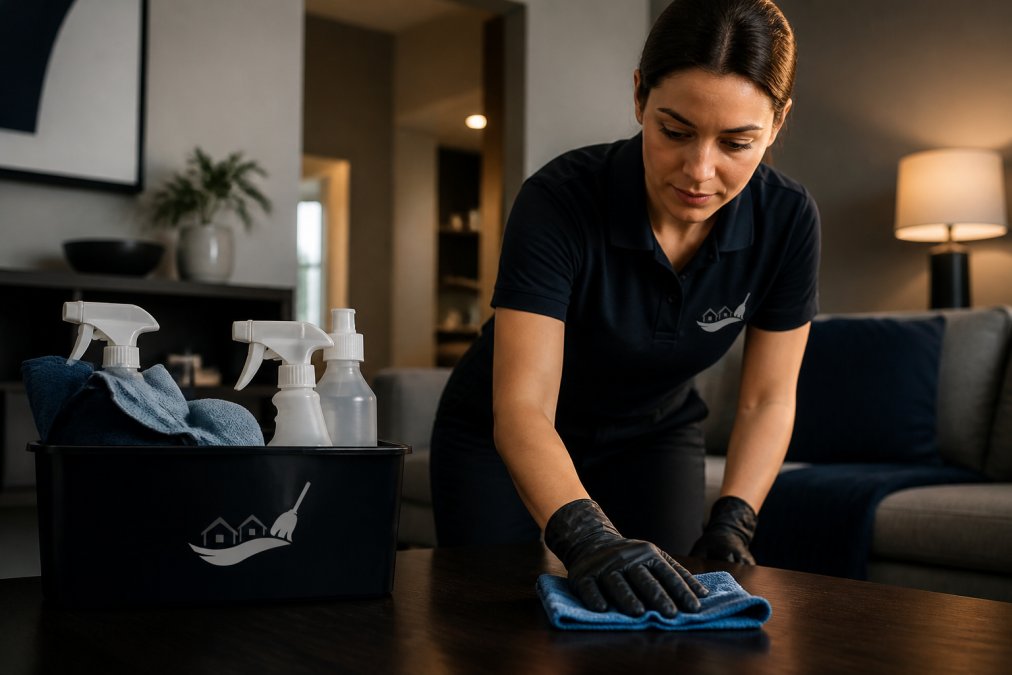
Standard cleaning is the backbone of maintaining a livable space. This is what professional cleaners handle during regular weekly or bi-weekly visits. It includes vacuuming all carpeted areas, mopping hard floors, dusting surfaces at eye level and above, wiping down countertops, sanitizing bathrooms (toilets, sinks, mirrors), and taking out trash. Standard cleaning also covers tidying up common areas, straightening items, making beds, and ensuring surfaces are clear of clutter.
A standard cleaning session typically focuses on high-touch surfaces and visible areas. Bathrooms get a thorough wipe-down of fixtures and mirrors. Kitchen countertops and appliance exteriors receive attention. Baseboards are dusted, though not scrubbed. The goal is to maintain cleanliness between deeper interventions, keeping your home hygienic and organized without the intensive labor of deep work.
Deep Cleaning Tasks
Deep cleaning tackles what standard cleaning doesn't reach. This includes scrubbing baseboards, cleaning inside the oven and refrigerator, wiping down light fixtures and ceiling fans, sanitizing the insides of kitchen cabinets, deep-cleaning grout lines in bathrooms, and addressing dust bunnies in corners and behind furniture. Deep cleaning also covers washing windows, cleaning inside microwaves, and disinfecting high-touch surfaces with extra intensity.
Deep cleaning is typically scheduled quarterly, semi-annually, or annually depending on your household's needs. It's more labor-intensive and time-consuming than standard cleaning, so it costs more and takes longer to complete. Many homeowners schedule deep cleaning before major life events, after construction or renovations, or when moving into a new home. It's the reset button for your living space, the kind of thorough work that makes everything feel brand new.
What Professional Cleaners Will Handle
When you hire professional cleaners, knowing what's included in their scope prevents misunderstandings. Professional cleaners are trained to work efficiently and systematically, tackling the tasks that matter most for health, hygiene, and appearance. Here's what you can realistically expect.
Kitchen Cleaning
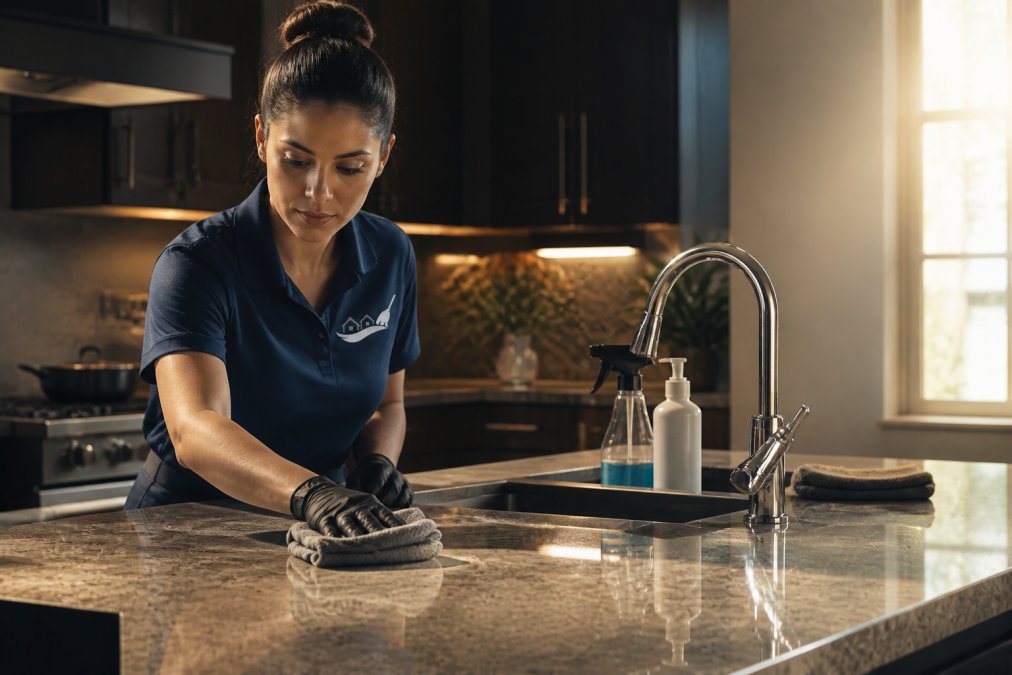
The kitchen is where professional cleaners often make the biggest visible impact. Countertops get wiped down thoroughly, removing crumbs and spills. Appliance exteriors, the front of the refrigerator, stovetop surface, microwave exterior, are cleaned and polished. Sinks are scrubbed and sanitized. The backsplash receives attention, especially around high-touch areas.
What professional cleaners typically won't do in a standard cleaning: clean inside the oven, scrub the interior of the refrigerator, degrease the stovetop burners, or organize your cabinets. These fall into deep cleaning territory. If you need these tasks done, mention it explicitly when booking, as they may require additional time or be offered as an add-on service. Professional cleaners understand these nuances and can discuss what's included in your service agreement before they arrive.
Bathroom Sanitization
Bathrooms demand special attention because they're high-touch, moisture-prone environments where hygiene matters most. Professional cleaners scrub toilets inside and out, clean and disinfect sinks, wipe mirrors, sanitize shower and tub surfaces, and mop floors thoroughly. Chrome fixtures get polished. Grout lines between tiles receive a basic cleaning during standard service.
During deep cleaning, grout lines get scrubbed more intensively, and tile walls may be addressed more thoroughly. Bathroom exhaust fans and vents might be cleaned. The key expectation for standard bathroom cleaning: it's sanitary, visibly clean, and free of soap scum and mildew on surfaces. Deep cleaning goes further into crevices and grout.
Floor Care and Dusting
Floors are a centerpiece of any cleaning service. Professional cleaners vacuum all carpeted areas thoroughly, including corners and under furniture edges. Hard floors, tile, laminate, hardwood, get mopped with appropriate cleaning solutions. Baseboards are dusted, though in standard cleaning they're typically wiped rather than scrubbed.
Dusting extends to surfaces at normal eye level: shelves, tables, countertops, and furniture tops. Light fixtures, ceiling fans, and high shelves are usually reserved for deep cleaning. During standard service, professional cleaners focus on maintaining what's visible and accessible, ensuring dust doesn't accumulate on everyday surfaces.
What Do House Cleaners Not Do
This is where clarity prevents disappointment. Professional cleaners have boundaries, and understanding them helps you prepare your home appropriately and manage expectations about what's included in your service.
Standard cleaning doesn't include organizing or decluttering. Professional cleaners won't sort through your belongings, file papers, or organize closets. They work around what's already there. If your home is cluttered, they'll clean surfaces they can access, but they won't move piles of items to clean underneath. This is why preparing your home beforehand matters so much.
Professional cleaners also don't typically handle laundry, yard work, or pet care beyond basic floor cleanup. They don't wash windows (unless specified as a deep cleaning add-on), clean inside appliances, or address structural issues like mold or pest problems. They won't move heavy furniture unless you've arranged it in advance. Specialized tasks, carpet shampooing, upholstery cleaning, pressure washing, usually require separate services.
Finally, professional cleaners don't perform repairs or handle hazardous materials. If something is broken or damaged, they'll work around it. If you have hoarding situations, severe mold, or pest infestations, that's beyond standard cleaning scope and may require professional remediation services instead.
How to Prepare Your Home for House Cleaners
The work you do before professional cleaners arrive has an outsized impact on the quality of service you receive. It's not about making your home perfect, it's about creating the conditions where cleaners can work efficiently and thoroughly.
Pre-Cleaning Decluttering Guide
Start by removing items from surfaces. Clear nightstands, dressers, bathroom counters, and kitchen countertops. Put away dishes, personal items, and clutter. This doesn't mean you need to organize everything perfectly, just move things to designated spots so cleaners can access and clean surfaces.
In the bathroom, move toiletries and personal items into cabinets or baskets. In the kitchen, clear the countertop except for items you use daily. In bedrooms, pick up clothes and put them in the closet or hamper. In living areas, clear coffee tables and side tables. The goal is to give cleaners a clear path to every surface without moving your belongings.
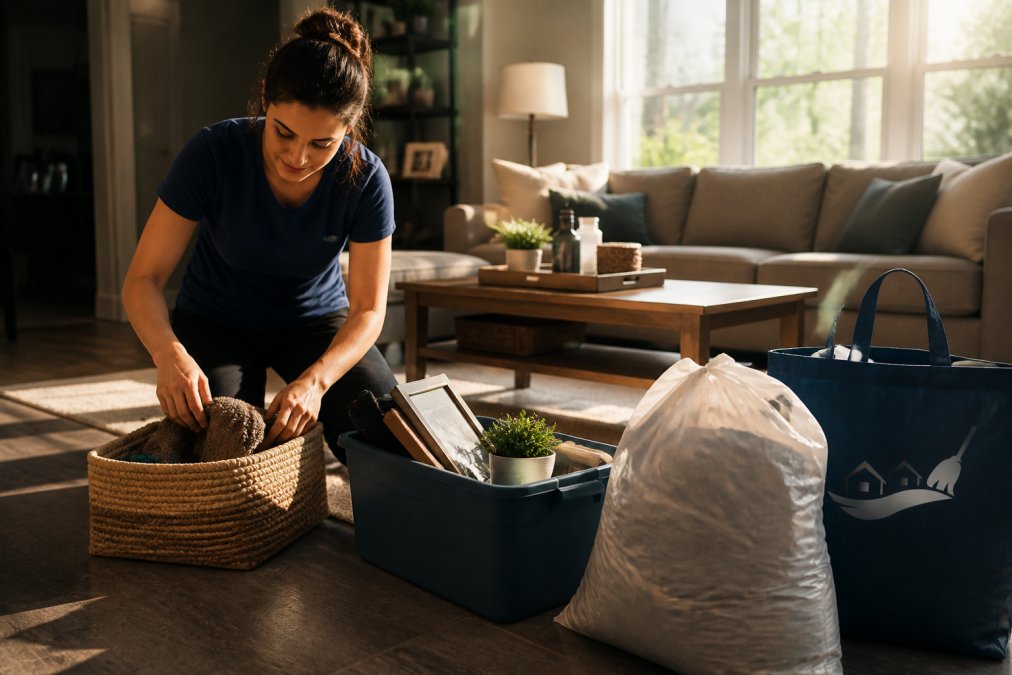
Vacate one small area if possible, a corner of the bedroom or a spot in the living room, where cleaners can place their supplies and equipment. This prevents them from taking up space in your kitchen or bathroom. If you have pets, secure them in a closed room or arrange for them to be elsewhere during the cleaning. This keeps them safe and allows cleaners to work without interruption.
Securing Valuables and Personal Items
Before cleaners arrive, put away jewelry, cash, important documents, and anything else you consider valuable or private. This protects your belongings and gives cleaners peace of mind, they won't accidentally move or damage something irreplaceable.
Secure medications, supplements, and personal care items. Store these in cabinets or drawers rather than leaving them on counters. This protects both your privacy and your items from accidental damage or contamination during cleaning.
Leave out cleaning supplies if you have a preference for specific products, or let cleaners know in advance what you'd like them to use. Some people have allergies or sensitivities, and communicating this upfront prevents problems. If you have pets, mention this too so cleaners can use pet-safe products if needed.
Professional Cleaning Service Satisfaction Guarantee
When you hire professional cleaners, you're entering into a service agreement. Understanding what satisfaction looks like, and what happens if you're not satisfied, protects your investment and sets clear expectations.
A reputable professional cleaning service stands behind their work. This means if you're genuinely unhappy with the cleaning quality, they'll address it. Some services offer a callback or touch-up within a certain timeframe if you identify issues immediately after cleaning. The specifics depend on the company's policy, so clarify this before your first appointment.
Satisfaction guarantees typically cover visible cleanliness, surfaces cleaned, floors vacuumed, bathrooms sanitized. They don't usually cover subjective preferences like how much you like the scent of the cleaning products or minor variations in how items are arranged. Clear communication about your expectations prevents disputes. If you have specific concerns, allergies, pet hair sensitivity, particular problem areas, mention these before cleaning day.
Post-Cleaning Inspection Checklist
After cleaners leave, take 15 minutes to walk through your home. Check that bathrooms are sanitized: toilets clean, sinks sparkle, mirrors are streak-free. Verify that floors are vacuumed and mopped, no visible debris or sticky spots. Confirm that surfaces are dusted and wiped. Look for any areas you specifically requested attention on.
Create a simple mental checklist: Are high-touch surfaces (doorknobs, light switches, countertops) visibly clean? Are bathrooms sanitized and odor-free? Are floors clear of debris? Do baseboards look dusted? If you notice issues, document them with photos if possible and contact the cleaning service within the timeframe specified in your agreement.
Most professional cleaners want to know if something didn't meet expectations. They have a reputation to maintain and prefer to fix problems quickly rather than lose a customer. Providing specific feedback, "The bathroom mirror has streaks" rather than "The bathroom isn't clean", helps them improve and shows you're engaged with the service.
Service Frequency and Scheduling Expectations
How often you schedule professional cleaners depends on your household, lifestyle, and budget. Understanding common scheduling patterns helps you decide what works for your situation.
Weekly cleaning is the standard for most households. This maintains consistent cleanliness and prevents buildup. For busy families with children or pets, weekly service often makes sense because the workload is constant. Bi-weekly cleaning works for smaller households or homes with fewer people. Monthly cleaning is typically too infrequent for ongoing maintenance but works as a supplement to your own cleaning efforts.
Some homeowners do a combination: monthly professional deep cleaning plus their own weekly tidying. Others schedule professional cleaners weekly and rarely clean themselves. The right frequency depends on your home's traffic, your schedule, and your cleanliness standards. Professional cleaners can recommend a schedule based on your situation, and you can always adjust as needed.
Scheduling consistency matters. If you book weekly on Thursdays, cleaners can plan their route efficiently. If you change the day and time frequently, it disrupts their schedule and may result in longer wait times for appointments. Most professional cleaning services offer flexible scheduling, but consistency benefits everyone.
Vetting Your Professional Cleaners
Hiring strangers to enter your home requires trust. Vetting cleaners properly protects your home, your family, and ensures you get quality service.
Start by checking reviews and asking for references. A reputable cleaning service should have documented customer feedback and be willing to provide contact information for past clients. Read reviews on Google, Yelp, and the company's website. Look for patterns: Do customers consistently praise reliability? Do they mention attention to detail? Are there complaints about missed appointments or quality issues?
Ask about the company's hiring process. Do they conduct background checks? Do they bond and insure their employees? These are signs of a professional operation that takes security seriously. A company that screens employees carefully is more likely to send reliable, trustworthy people to your home.
Background Checks and Bonded Insurance
Background checks are a standard practice for reputable professional cleaning services. They verify that employees don't have criminal histories that would make them unsuitable for home access. While no background check is perfect, it's a baseline screening that protects homeowners.
Bonded and insured cleaners are essential. Bonding means the company has purchased a bond that protects you if an employee steals or damages your property. Insurance covers accidents, if a cleaner breaks something or causes damage, the company's insurance handles it rather than leaving you to recover costs. When you hire professional cleaners, always confirm they're bonded and insured before signing any agreement.
Ask to see proof of bonding and insurance. Legitimate companies are happy to provide this documentation. If a cleaning service hesitates or can't produce proof, that's a red flag. You're not being overly cautious, you're protecting your home and your peace of mind.
Conclusion
Knowing what to expect from professional cleaners removes anxiety and sets you up for a positive experience. Standard cleaning maintains your home's cleanliness between deeper interventions. Deep cleaning tackles the intensive work that happens less frequently. Understanding the difference helps you choose the right service for your needs.
Preparing your home by decluttering and securing valuables makes the cleaners' job easier and ensures they can access every surface. Clear communication about your expectations, specific problem areas, product preferences, scheduling needs, prevents misunderstandings. A reputable professional cleaning service, like Maticulous Cleaning, prioritizes reliability and meticulous attention to detail, delivering the clean spaces and better places you deserve. Get started with Maticulous Cleaning and experience the peace of mind that comes with a professionally maintained home.
Frequently Asked Questions
Q: What is reasonable to expect from professional cleaners?
A: Professional cleaners should handle standard cleaning tasks including vacuuming, mopping, dusting surfaces and baseboards, sanitizing bathrooms, and cleaning kitchen countertops and appliance exteriors. They'll also manage high-touch surfaces like doorknobs and light switches. Expectations depend on whether you choose standard maintenance cleaning or deep cleaning. Most professional cleaners focus on visible surfaces rather than organizing personal items or handling specialized tasks like window washing or oven interiors.
Q: What is the difference between standard cleaning and deep cleaning?
A: Standard cleaning covers routine maintenance: vacuuming, mopping, dusting, bathroom sanitizing, and countertop cleaning. Deep cleaning includes everything in standard cleaning plus scrubbing baseboards, inside appliances, behind furniture, inside cabinets, and other hard-to-reach areas. Standard cleaning typically happens weekly or bi-weekly, while deep cleaning is scheduled less frequently or for move-in/move-out situations. Your professional cleaning service can explain which tasks fall under each category.
Q: How should I prepare my home for a professional cleaning visit?
A: Declutter surfaces by removing personal items, toys, and clutter from floors and countertops. This prevents professional cleaners from moving things around and speeds up their work. Secure valuables and personal documents. Clear pathways so cleaners can move easily through your home. If you have pets, ensure they're in a safe space away from cleaning supplies. Communicate any specific concerns or areas needing extra attention. A tidy home lets your professional cleaning service focus on deep cleaning rather than organizing.
Q: What items do professional house cleaners typically not clean?
A: Professional cleaners typically don't clean inside ovens, refrigerators, or other appliance interiors unless specified in a deep cleaning package. They won't organize closets, drawers, or personal belongings. Most don't handle laundry, windows, or carpet shampooing. They won't move heavy furniture or handle specialty items like electronics or delicate collectibles. Always discuss your professional cleaning service's scope before scheduling to understand what's included and what requires separate arrangements.
Q: What should I do after professional cleaners leave my home?
A: Conduct a post-cleaning inspection checklist: walk through each room and verify that all agreed-upon areas were cleaned to your satisfaction. Check baseboards, countertops, bathroom fixtures, and floors. Note any missed spots or concerns. Most professional cleaning services offer satisfaction guarantees and will return to address issues if contacted promptly. Document any problems with photos if needed. Communicate feedback respectfully so your professional cleaners can adjust their approach for future visits.
Q: Are you supposed to leave the house when cleaners come?
A: You don't have to leave, but many homeowners do to give cleaners uninterrupted access and privacy. If you stay home, stay out of their way so they can work efficiently. Some people prefer to be present during the first visit to show the professional cleaners their expectations and preferences. Discuss this with your cleaning service beforehand. If you have pets or concerns about home security, communicate these details so your professional cleaners can address them appropriately.
Q: How often should I schedule professional cleaning services?
A: Frequency depends on your household size, lifestyle, and budget. Weekly cleaning maintains a consistently clean home with less intensive work each visit. Bi-weekly cleaning works well for many families and balances cost with cleanliness. Monthly deep cleaning suits those with smaller households or tighter budgets. Some people combine regular maintenance cleaning with occasional deep cleaning for move-in/move-out situations. Your professional cleaning service can recommend a schedule based on your home's needs and your preferences.
This article was written using GrandRanker
Frequently Asked Questions
Q: What is reasonable to expect from professional cleaners?
A: Professional cleaners should handle standard cleaning tasks including vacuuming, mopping, dusting surfaces and baseboards, sanitizing bathrooms, and cleaning kitchen countertops and appliance exteriors. They'll also manage high-touch surfaces like doorknobs and light switches. Expectations depend on whether you choose standard maintenance cleaning or deep cleaning. Most professional cleaners focus on visible surfaces rather than organizing personal items or handling specialized tasks like window washing or oven interiors.
Q: What is the difference between standard cleaning and deep cleaning?
A: Standard cleaning covers routine maintenance: vacuuming, mopping, dusting, bathroom sanitizing, and countertop cleaning. Deep cleaning includes everything in standard cleaning plus scrubbing baseboards, inside appliances, behind furniture, inside cabinets, and other hard-to-reach areas. Standard cleaning typically happens weekly or bi-weekly, while deep cleaning is scheduled less frequently or for move-in/move-out situations. Your professional cleaning service can explain which tasks fall under each category.
Q: How should I prepare my home for a professional cleaning visit?
A: Declutter surfaces by removing personal items, toys, and clutter from floors and countertops. This prevents professional cleaners from moving things around and speeds up their work. Secure valuables and personal documents. Clear pathways so cleaners can move easily through your home. If you have pets, ensure they're in a safe space away from cleaning supplies. Communicate any specific concerns or areas needing extra attention. A tidy home lets your professional cleaning service focus on deep cleaning rather than organizing.
Q: What items do professional house cleaners typically not clean?
A: Professional cleaners typically don't clean inside ovens, refrigerators, or other appliance interiors unless specified in a deep cleaning package. They won't organize closets, drawers, or personal belongings. Most don't handle laundry, windows, or carpet shampooing. They won't move heavy furniture or handle specialty items like electronics or delicate collectibles. Always discuss your professional cleaning service's scope before scheduling to understand what's included and what requires separate arrangements.
Q: What should I do after professional cleaners leave my home?
A: Conduct a post-cleaning inspection checklist: walk through each room and verify that all agreed-upon areas were cleaned to your satisfaction. Check baseboards, countertops, bathroom fixtures, and floors. Note any missed spots or concerns. Most professional cleaning services offer satisfaction guarantees and will return to address issues if contacted promptly. Document any problems with photos if needed. Communicate feedback respectfully so your professional cleaners can adjust their approach for future visits.
Q: Are you supposed to leave the house when cleaners come?
A: You don't have to leave, but many homeowners do to give cleaners uninterrupted access and privacy. If you stay home, stay out of their way so they can work efficiently. Some people prefer to be present during the first visit to show the professional cleaners their expectations and preferences. Discuss this with your cleaning service beforehand. If you have pets or concerns about home security, communicate these details so your professional cleaners can address them appropriately.
Q: How often should I schedule professional cleaning services?
A: Frequency depends on your household size, lifestyle, and budget. Weekly cleaning maintains a consistently clean home with less intensive work each visit. Bi-weekly cleaning works well for many families and balances cost with cleanliness. Monthly deep cleaning suits those with smaller households or tighter budgets. Some people combine regular maintenance cleaning with occasional deep cleaning for move-in/move-out situations. Your professional cleaning service can recommend a schedule based on your home's needs and your preferences.