 ultimate-guide
Residential Cleaning Checklist for Homeowners
Table of Contents
- Daily Cleaning Tasks to Maintain a Fresh Home
- Weekly Cleaning Routine for a Deeper Clean
- Monthly Deep Cleaning Checklist
- Essential House Cleaning Supplies List
- How Long Does It Take to Clean a House
- Residential Cleaning Checklist and Security Deposit Protection
- Eco-Friendly Cleaning Practices for Your Home
- Conclusion
- Frequently Asked Questions
Last Updated: September 3, 2026
Daily Cleaning Tasks to Maintain a Fresh Home
A residential cleaning checklist for homeowners is your first line of defense against clutter and dirt accumulation. Daily tasks prevent larger problems from developing later and keep your home functioning properly and feeling fresh.
Make your bed each morning, this takes less than five minutes and sets the tone for an organized bedroom. Do a quick kitchen sweep after meals: wipe countertops, load the dishwasher, and put away items. Handle dishes immediately rather than letting them pile up, as a sink full of dirty plates becomes a breeding ground for bacteria. Wipe down your bathroom sink and mirror after morning and evening routines, a quick spray and wipe takes 30 seconds but prevents soap scum and toothpaste residue from hardening.
Before bed, spend 10 minutes doing a living area reset: put throw pillows back in place, fold blankets, and collect scattered items. Daily maintenance tasks are far less demanding than recovering from a week of neglect. When you stay on top of small messes, deep cleaning becomes easier and less frequent.
Weekly Cleaning Routine for a Deeper Clean
Your weekly residential cleaning checklist for homeowners should target surfaces and areas that daily maintenance doesn't fully address. Plan these tasks for a specific day each week so they become automatic. Most households benefit from dedicating 2-3 hours on one day.
Start with vacuuming all carpeted areas and high-traffic zones using a HEPA filter vacuum if anyone has allergies or asthma. Dust ceiling fans and light fixtures, which collect dust that eventually settles on other surfaces. Mop hard floors with appropriate cleaner for your floor type, paying attention to corners and under furniture where debris hides.
Clean your bathroom thoroughly: scrub the toilet inside and out, disinfect the shower or tub, and wipe down all fixtures. Use a microfiber cloth for mirrors and chrome to prevent streaking. Disinfect high-touch surfaces like door handles and light switches, which harbor bacteria from daily contact.
Change bed linens and wash them in hot water to remove dust mites, skin cells, and bacteria. While sheets are washing, wipe down nightstands and dressers. Spend 15 minutes in each bedroom putting items back where they belong to prevent clutter from becoming overwhelming.
Monthly Deep Cleaning Checklist
Your monthly deep cleaning checklist addresses areas you can't reach during weekly routines. These tasks take 3-4 hours but prevent deterioration that leads to expensive repairs. Schedule them on the same day each month.
Inside your refrigerator, remove all items and wipe down shelves with a damp cloth, checking expiration dates and discarding expired items. Clean the microwave interior by heating a bowl of water with lemon for five minutes to loosen stuck-on food, then wipe clean.
Behind and under large appliances like the refrigerator and stove collect grease and dust. Pull these out carefully, vacuum underneath, and wipe the exterior with appropriate cleaner. Degrease stovetops and range hoods where cooking has left buildup.
Descale your coffee maker or kettle if you have hard water by filling the reservoir with equal parts white vinegar and water, running it through, then rinsing with plain water twice. Wipe down all baseboards throughout the home with a damp cloth, and clean inside cabinet doors and on shelves where dust accumulates.
Wash windows inside and out, including window tracks and sills where dirt and dead insects accumulate. Wipe light switch plates and door handles with disinfectant. Clean inside your oven if it's not self-cleaning, vacuum upholstered furniture thoroughly and spot-clean stains, and descale your shower head by soaking it in vinegar to remove mineral buildup.
Essential House Cleaning Supplies List
You don't need dozens of products to maintain a clean home. A focused essential house cleaning supplies list keeps your costs down and your cleaning routine simple.
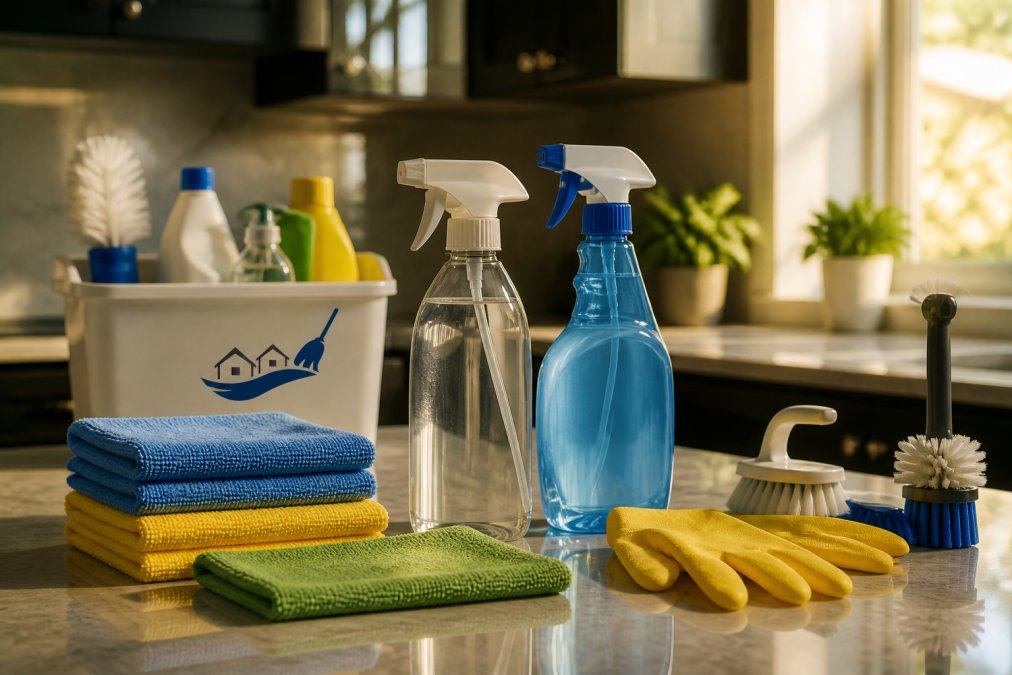
Start with an all-purpose cleaner for general surfaces and a disinfectant spray for bathrooms and high-touch areas. Microfiber cloths outperform paper towels and cotton rags, trapping dust and dirt more effectively with less water and reduced streaking. A good vacuum with a HEPA filter captures particles that regular vacuums recirculate into the air. For hard floors, use a mop and bucket system with microfiber mop pads.
Toilet bowl cleaner with a brush designed specifically for toilets prevents bacteria from spreading. Baking soda and white vinegar handle many cleaning tasks naturally if you prefer eco-friendly options. Rubber gloves protect your hands from harsh chemicals and hot water. For specific needs, glass cleaner prevents streaking on windows and mirrors, and a small step stool helps you reach ceiling fans and high shelves safely.
Don't buy specialty cleaners for every surface type. Most homes function perfectly well with an all-purpose cleaner, disinfectant, toilet cleaner, and glass cleaner.
How Long Does It Take to Clean a House
The time required to clean a house depends on the home's size, current condition, and how thoroughly you clean. For a standard 2-bedroom, 1-bathroom home, basic daily tidying takes 15-20 minutes, a weekly cleaning routine takes 2-3 hours, and a monthly deep clean takes 3-4 hours.
Larger homes naturally take longer. A 4-bedroom, 2-bathroom home might require 4-5 hours for weekly cleaning. If your home is currently cluttered or hasn't been cleaned in weeks, initial deep cleaning takes 6-8 hours to reach baseline cleanliness. Once you establish a routine, maintenance cleaning becomes faster because you're preventing accumulation rather than recovering from it.
Professional cleaning services like Maticulous Cleaning handle the same work. The frequency you clean also affects total time, staying on top of daily tasks and completing weekly routines consistently means you spend less time overall.
Residential Cleaning Checklist and Security Deposit Protection
When you're moving out of a rental property, your residential cleaning checklist becomes your security deposit protection. Landlords inspect homes against specific standards, and cleaning failures cost you money in deductions.
Document the property's condition with photos before you move in and before you move out. Clean thoroughly according to lease requirements. Walls should be clean and free of marks, with baseboards spotless. Floors must be spotless, vacuum all carpeting thoroughly and mop hard floors until they shine, removing any stains.
Bathrooms receive intense scrutiny. Scrub the toilet until it gleams, disinfect the shower and tub removing all soap scum and mold, and wipe down all fixtures. The kitchen is equally important: degrease the stovetop and range hood, clean inside the oven, wipe down cabinet exteriors and interiors, and clean the refrigerator interior and exterior.
Windows must be clean inside and out, including tracks and sills. Wipe all door frames and doors, and remove any adhesive from stickers or fixtures you removed. Sweep patios and porches, and remove debris from gutters if accessible.
Take photos of your cleaned home and keep receipts from any professional cleaning services. These prove you fulfilled your cleaning obligations.
Eco-Friendly Cleaning Practices for Your Home
Eco-friendly cleaning practices protect your family's health and reduce environmental impact without sacrificing cleanliness. Many conventional cleaners contain chemicals that irritate skin and respiratory systems.
Baking soda is your most versatile natural cleaner. Sprinkle it on carpets, let it sit for 15 minutes, then vacuum. Mix it with water to create a paste for scrubbing sinks and tubs. White vinegar cuts through grease and mineral deposits, mix equal parts vinegar and water in a spray bottle for windows, mirrors, and general surfaces. Lemon juice is a natural degreaser and deodorizer that cuts through kitchen grease better than many commercial products.
Castile soap is a plant-based soap that cleans effectively without harsh chemicals and is safe for families with young children and pets. Essential oils like tea tree, lavender, and lemon add cleaning power and pleasant scents, add a few drops to your vinegar or baking soda solutions.
Microfiber cloths reduce your need for cleaning chemicals altogether by trapping dirt and bacteria with just water. Making your own cleaning products costs a fraction of commercial alternatives. The trade-off with eco-friendly cleaning is that some tasks require more elbow grease or longer soaking times, but you're not sacrificing effectiveness.
Conclusion
A comprehensive residential cleaning checklist for homeowners transforms how you maintain your living space. Daily tasks prevent accumulation, weekly routines address what daily cleaning misses, and monthly deep cleaning keeps your home in pristine condition. The time investment is manageable when you follow a structured approach.
For homeowners managing busy schedules, Maticulous Cleaning provides professional residential cleaning services that handle the routines you outline in this checklist. Our team brings meticulous attention to detail to every task, from daily tidying to monthly deep cleaning, ensuring your home receives the thorough care it deserves. When life gets hectic, professional cleaning services free your time while maintaining the clean, well-maintained home you want. Experience the peace of mind that comes with a pristine living environment by letting our reliable team handle your cleaning needs.
Frequently Asked Questions
What should I include on my residential cleaning checklist for daily maintenance?
Daily cleaning focuses on high-touch surfaces and visible clutter. Wipe down kitchen counters and dining tables, load the dishwasher, do a quick sweep or vacuum of main living areas, and sanitize bathroom sinks and toilets. These tasks prevent dirt from accumulating and maintain basic hygiene. Most homeowners spend 15-30 minutes on daily tasks depending on household size and activity level.
How long does it take to clean a house thoroughly?
A typical deep cleaning of a 2,000 square foot home takes 4-6 hours for one person, depending on clutter levels and current condition. Daily maintenance takes 15-30 minutes, weekly routines require 1-2 hours, and monthly deep cleaning takes 2-4 hours. Professional teams work efficiently due to experience and equipment.
What essential house cleaning supplies should every homeowner have?
Stock microfiber cloths, all-purpose cleaner, disinfectant spray, glass cleaner, toilet brush, vacuum with HEPA filter, mop, broom, dustpan, and bathroom scrub brush. Add descaling solution for kitchen and bathroom fixtures, degrease for stovetops, and upholstery cleaner for furniture. Quality supplies make cleaning faster and more effective than cheap alternatives.
How can I use a residential cleaning checklist to protect my security deposit when moving out?
Document every area covered in your checklist with photos before moving. Focus on baseboards, light fixtures, air vents, window tracks, grout lines, and appliance interiors, areas landlords inspect closely. Address spot cleaning immediately and ensure all surfaces are polished and sanitized. A thorough checklist prevents disputes over deposit deductions by proving you maintained the property to move-in condition.
What's the difference between routine maintenance and deep cleaning?
Routine maintenance includes daily dusting, vacuuming, and sanitizing high-touch surfaces to prevent buildup. Deep cleaning tackles areas rarely accessed during regular routines, such as inside appliances, behind furniture, ceiling fans, and grout lines. Monthly deep cleaning prevents grime accumulation and extends the life of surfaces and fixtures.
How often should I deep clean my home?
Most homeowners benefit from monthly deep cleaning of high-use areas like kitchens and bathrooms, with full-home deep cleaning every 3-6 months depending on household size and activity. Homes with pets, children, or allergy concerns may need more frequent sanitizing of surfaces and HEPA filter maintenance to reduce allergens and bacteria.
This article was written using GrandRanker
Frequently Asked Questions
What should I include on my residential cleaning checklist for daily maintenance?
Daily cleaning focuses on high-touch surfaces and visible clutter. Wipe down kitchen counters and dining tables, load the dishwasher, do a quick sweep or vacuum of main living areas, and sanitize bathroom sinks and toilets. These tasks prevent dirt from accumulating and maintain basic hygiene. Most homeowners spend 15-30 minutes on daily tasks depending on household size and activity level.
How long does it take to clean a house thoroughly?
A typical deep cleaning of a 2,000 square foot home takes 4-6 hours for one person, depending on clutter levels and current condition. Daily maintenance takes 15-30 minutes, weekly routines require 1-2 hours, and monthly deep cleaning takes 2-4 hours. Professional teams work efficiently due to experience and equipment.
What essential house cleaning supplies should every homeowner have?
Stock microfiber cloths, all-purpose cleaner, disinfectant spray, glass cleaner, toilet brush, vacuum with HEPA filter, mop, broom, dustpan, and bathroom scrub brush. Add descaling solution for kitchen and bathroom fixtures, degrease for stovetops, and upholstery cleaner for furniture. Quality supplies make cleaning faster and more effective than cheap alternatives.
How can I use a residential cleaning checklist to protect my security deposit when moving out?
Document every area covered in your checklist with photos before moving. Focus on baseboards, light fixtures, air vents, window tracks, grout lines, and appliance interiors—areas landlords inspect closely. Address spot cleaning immediately and ensure all surfaces are polished and sanitized. A thorough checklist prevents disputes over deposit deductions by proving you maintained the property to move-in condition.
What's the difference between routine maintenance and deep cleaning?
Routine maintenance includes daily dusting, vacuuming, and sanitizing high-touch surfaces to prevent buildup. Deep cleaning tackles areas rarely accessed during regular routines, such as inside appliances, behind furniture, ceiling fans, and grout lines. Monthly deep cleaning prevents grime accumulation and extends the life of surfaces and fixtures.
How often should I deep clean my home?
Most homeowners benefit from monthly deep cleaning of high-use areas like kitchens and bathrooms, with full-home deep cleaning every 3-6 months depending on household size and activity. Homes with pets, children, or allergy concerns may need more frequent sanitizing of surfaces and HEPA filter maintenance to reduce allergens and bacteria.