 how-to
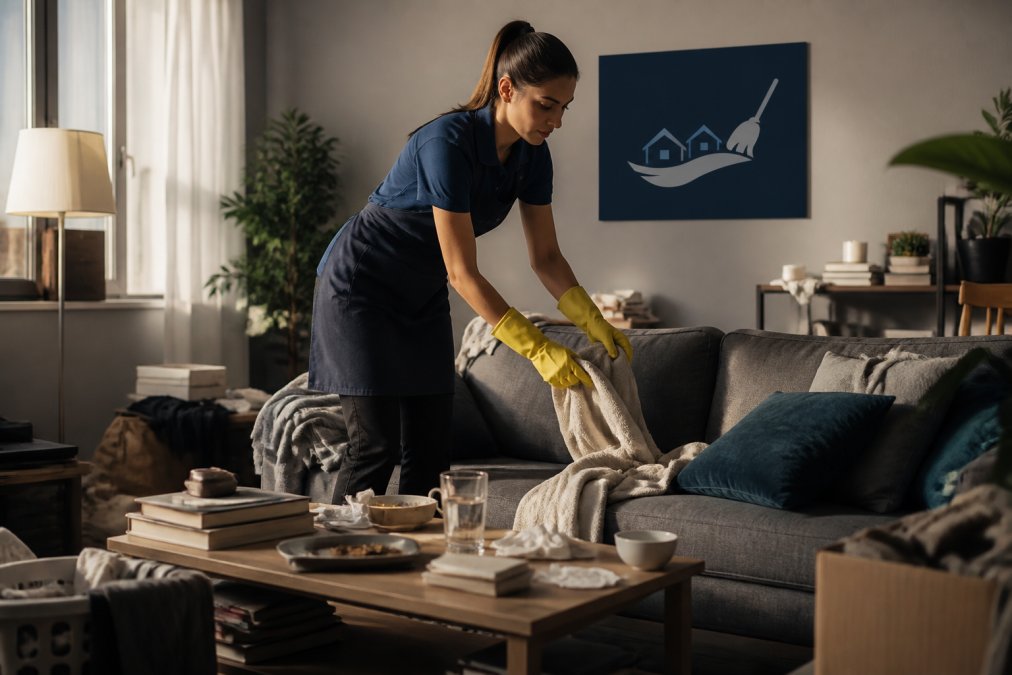
How to Clean a Messy Home: Step-by-Step Plan
Table of Contents
- Where to Start When Your Home Feels Overwhelming
- Decluttering vs. Cleaning: Which Comes First
- Your Cleaning Checklist for a Messy House, Room by Room
- How Long Does It Take to Deep Clean a House?
- Best Cleaning Supplies for Deep Cleaning on a Budget
- How to Get Your Full Security Deposit Back
- Building a Cleaning Schedule That Sticks
- Neurodivergent-Friendly Cleaning Strategies That Work
- Frequently Asked Questions
Last Updated: September 14, 2026
Where to Start When Your Home Feels Overwhelming
To clean a messy home, pick one corner, surface, or category and start there. You do not need a whole-house plan before you touch a single thing.
Executive dysfunction is the real barrier, not laziness. When every room is equally messy, the brain cannot rank tasks, so it stalls. Shrink the first step until it feels too easy to skip.
At Maticulous Cleaning, we provide professional residential cleaning services designed to transform your living space into a pristine environment.
Below: the exact order of operations, how long a deep clean takes, and how to build a schedule that survives a bad week.
Decluttering vs. Cleaning: Which Comes First
Decluttering comes first, every time. Cleaning a surface still covered in stuff wastes effort because you move the mess twice.
Here is the distinction that matters:
- Decluttering removes items that do not belong in the space: trash, laundry, dishes, mail, toys.
- Cleaning removes dirt from surfaces that are now visible: dust, grime, stains, germs.
Vacuum before you pick up the floor and you miss the actual dirt. Wipe a counter stacked with mail and you clean the same six inches twice.
Sorting is the slow part, so set a rule first: if you have not used it in a year and it is not sentimental or expensive, it leaves the room. That resolves most decisions without debate.
Your Cleaning Checklist for a Messy House, Room by Room
A room-by-room checklist beats a whole-house list because your brain can finish something. Work one room completely before the next.

Use this order inside every room:
- Trash removal. Bag it and take it out immediately. Do not set it by the door.
- Laundry and dishes. Gather laundry baskets, move dirty dishes to the kitchen.
- Sorting items. Everything else goes where it lives or into the "goes elsewhere" basket.
- Surface dusting. Start high: shelves, ceiling fans, tops of frames.
- Wipe-down. Counters, tables, handles, light switches.
- Vacuuming or mopping. Always last, always top-to-bottom.
Trash and Laundry: The Two-Minute Head Start
Trash and laundry unlock every other task and take almost no decision-making. You do not sort, fold, or organize anything. You just move it.
Walk the room with a trash bag and a laundry basket. Obvious garbage goes in the bag, dirty clothing in the basket. That is the entire job.
Most people find the room looks dramatically better after this one pass, and that visible progress breaks the paralysis. Momentum is a cleaning tool.
The Top-to-Bottom, Left-to-Right Method
Dust and dirt fall, so clean from the highest point downward: ceiling fans, light fixtures, shelves, furniture, then floors last.
The left-to-right half is about not missing spots. Pick a wall, work clockwise, and do not jump around. Professional cleaners use this because it eliminates backtracking.
Skirting boards, baseboards, and door frames are the spots most people skip. Hit them on the way down, not as a separate project.
How Long Does It Take to Deep Clean a House?
A deep clean typically takes two to six hours for an average home, depending on size, clutter, and time since the last thorough clean. A single room takes thirty to sixty minutes.
Deep cleaning differs from tidying. Tidying is surface-level: picking up, wiping counters, a quick vacuum. Deep cleaning reaches behind and under furniture, inside appliances, and into spots routine cleaning never touches.
| Home Size | Light Deep Clean | Heavy Deep Clean |
|---|---|---|
| Studio or 1 bedroom | 2-3 hours | 4-5 hours |
| 2-3 bedrooms | 3-4 hours | 5-7 hours |
| 4+ bedrooms | 4-6 hours | 7-10 hours |
Add time if the home has not been deep cleaned in months, if there are pets, or if you work alone. Splitting the job across two days is not cheating; it is how the job gets finished.
What Actually Drives the Time Estimate
The table is a range, not a promise. Four variables move the number more than square footage:
- Clutter density. A 900-square-foot apartment packed with belongings can take longer than a tidy 2,000-square-foot house. You cannot clean a surface you cannot see, so every cluttered surface adds a decluttering pass.
- Time since the last deep clean. Grease, soap scum, and dust build in layers. A kitchen cleaned monthly wipes down in twenty minutes; after a year of cooking it takes an hour, because the buildup has bonded and needs dwell time with a cleaner before it releases.
- Pets and occupants. Pet hair weaves into upholstery and carpet fibers and resists a single vacuum pass. Homes with shedding pets or several occupants add thirty to sixty minutes across the whole job.
- Number of bathrooms. Bathrooms are the slowest rooms per square foot because of fixtures, grout, glass, and separate surfaces. Each full bathroom adds roughly thirty to forty-five minutes.
Per-Task Time Breakdown
For a realistic estimate, add up the tasks rather than guessing from square footage. These are working ranges for one average room:
- Trash and laundry removal: 10-20 minutes
- Sorting and putting items away: 15-45 minutes (the most variable step)
- Dusting high surfaces: 10-15 minutes
- Wiping counters, tables, and touch points: 10-20 minutes
- Bathroom fixtures, toilet, tub, and glass: 30-45 minutes
- Kitchen appliances inside and out: 30-60 minutes
- Vacuuming and mopping: 20-40 minutes
Why the Estimate Matters More Than the Schedule
A wrong estimate is the most common reason a cleaning plan collapses. Block two hours for a five-hour job and you quit at hour two feeling like you failed, when the real problem was the plan. Block the realistic number, or split the work across two days.
Best Cleaning Supplies for Deep Cleaning on a Budget
You can deep clean an entire home with a short, inexpensive supply kit. Most specialty cleaners are just fragrance and a spray bottle.
A budget kit covers everything:
- All-purpose cleaner for counters, sinks, and most hard surfaces
- White vinegar for glass, mineral deposits, and deodorizing
- Baking soda for scrubbing and absorbing odors
- A grout or soft-bristle brush for tile and corners
- Microfiber cloths, at least four, for dusting and wiping
- Reusable spray bottles to mix your own diluted solutions
- Rubber gloves and a mop with a washable head
- Vacuum with a crevice attachment for edges and under furniture
The microfiber cloth does more work than any bottle in your cabinet. It traps dust instead of pushing it around, which is why it replaces most paper towels and specialty dusters.
Buy the basics once, then restock only what you run out of. A common mistake is buying a dozen specialty products before you know which surfaces you have.
How to Get Your Full Security Deposit Back
Getting your full security deposit back comes down to documentation and detail. Landlords withhold money for damage, not normal wear, and the difference is usually cleanliness and evidence.
The standard process:
- Read your lease for the exact move-out cleaning requirements before you start.
- Photograph every room, wall, and fixture on the day you finish.
- Clean inside the oven, refrigerator, and cabinets, not just around them.
- Address the spots inspectors check first: blinds, baseboards, light fixtures, and behind appliances.
- Patch nail holes and touch up scuffs where the lease requires it.
- Request a walk-through and get the result in writing.
Many states set rules for how deposits must be handled and returned, and the U.S. Department of Housing and Urban Development guidance on tenant rights points renters to the rules that apply where they live. Check your state's requirements, since timelines and itemization rules vary.
If you would rather not gamble on an inspection, a move-out deep clean from a professional team removes the guesswork.
Normal Wear vs. Damage: The Line That Decides Your Deposit
Most deposit disputes are not about whether the home was dirty, but whether a condition counts as normal wear or damage. This distinction is the biggest lever on your refund.
Conditions generally treated as normal wear:
- Faded paint or minor scuffs on walls from furniture and daily life
- Small nail holes from hanging pictures
- Worn carpet in high-traffic paths
- Loose grout or caulk that has aged
- Minor scratches on floors from normal use
Conditions generally treated as damage:
- Burns, deep gouges, or large holes in walls or floors
- Pet stains or odors that require carpet replacement
- Broken fixtures, missing hardware, or torn blinds
- Stains from spills that were never cleaned
- Excessive filth that requires professional remediation
The practical rule most property managers apply: if the condition would require repair or replacement beyond routine turnover work, it is damage. If a standard clean and a coat of paint resolve it, it is wear.
The Documentation System That Wins Disputes
Photos decide most deposit cases, but only if taken correctly. Blurry phone shots will not help you.
- Date-stamp everything. Most phone cameras embed the date automatically. Confirm it is on before you start.
- Shoot wide, then close. One wide shot per room to establish the overall condition, then close-ups of anything you are worried about.
- Photograph the same angles on move-in and move-out. Matching before-and-after angles are far more persuasive than unmatched shots.
- Include a timestamped walk-through video. A slow pan of each room with the date visible on screen is hard to dispute.
- Keep receipts for any cleaning or repairs you paid for. If you hired a cleaner, the invoice proves the work was done.
Know Your State's Rules Before You Move Out
Deposit handling is governed by state law, and the rules vary widely on three points:
- Return deadline. States set a window, often ranging from fourteen to sixty days after move-out, for the landlord to return the deposit or send an itemized statement.
- Itemization requirement. Most states require a written, itemized list of any deductions. A lump-sum deduction without itemization is often not enforceable.
- Penalties for wrongful withholding. Many states allow you to recover more than the deposit itself, sometimes double or triple the amount, if the landlord withheld it in bad faith.
Your state's attorney general or consumer protection office publishes the specific rules and deadlines. Read those before you move out, not after, so you know what the landlord must do and what you must document.
Building a Cleaning Schedule That Sticks
A cleaning schedule sticks when tasks are small enough to survive a bad week. Most schedules fail because they are built for an ideal week that never arrives.
Structure it in three layers:
- Daily tasks: dishes, wiping counters, one load of laundry, a two-minute tidy before bed.
- Weekly chores: vacuuming, mopping, bathroom wipe-down, changing bedding.
- Monthly or seasonal: inside the oven, windows, baseboards, behind furniture.
The reset routine matters more than the schedule. Ten minutes each evening returning a room to baseline prevents the weekly job from becoming a weekend project. Attach the new task to something you already do, like wiping the counter while the coffee brews.
The most common schedule mistake is planning a four-hour Saturday clean. Miss one Saturday and the whole system collapses. Spread the work across the week in fifteen-minute blocks instead, and a missed day costs you almost nothing.
Once the home is clean, maintenance keeps it that way. Systematizing small tasks is cheaper than repeatedly digging out from a mess.
Neurodivergent-Friendly Cleaning Strategies That Work
Standard cleaning advice assumes a brain that can start tasks on command. If yours cannot, the fix is not more willpower. It is changing the task itself.
Strategies that work for neurodivergent cleaners:
- Use a productivity timer. Set it for ten minutes and clean until it rings. The timer gives the task an end, which makes it startable.
- Lower the bar on purpose. "Put away five things" is a complete task. Five is enough.
- Body doubling. Clean while on a call or with someone else in the room. Presence supplies the activation that internal motivation does not.
- Reduce visual clutter first. Visible mess is what triggers the overwhelm. Clear one flat surface and the room reads as calmer immediately.
- Work with your energy, not against it. If mornings are sharp, do the kitchen then. Save low-effort tasks like laundry folding for low-energy hours.
- Accept non-negotiables only. Pick three tasks that must happen daily and let the rest be optional. A short chore list you actually finish beats a long one you abandon.
None of this is a workaround for laziness. It is matching the method to the brain doing the work, and it is the difference between a home that stays livable and one that resets to chaos monthly.
Frequently Asked Questions
What is the 5-5-5 rule for cleaning?
The 5-5-5 rule breaks cleaning into timed bursts: five minutes picking up trash, five minutes gathering items that belong in other rooms, and five minutes putting things away. It works because it removes the pressure of finishing everything at once. Set a timer for each five-minute block and stop when it rings, even if you are not done. The goal is starting, not perfection. Repeat the cycle as many times as you have energy for, and you will see visible progress in under twenty minutes.
How do you clean a house that hasn't been cleaned in months?
Start by removing trash and laundry from every room before you scrub anything. Bag the trash, pile laundry in baskets, and set them by the door. Then work one room at a time, top to bottom: dust ceiling fans and shelves first, wipe surfaces second, and vacuum or mop last so you are not cleaning the same floor twice. Expect a full deep clean of a neglected house to take several hours or a full day. If the job feels too large, a professional deep cleaning service can reset the whole home in one visit.
What is a messy house a symptom of?
A consistently messy house often points to executive dysfunction, low energy, depression, or simply having more stuff than storage space. It is rarely laziness. When tasks feel paralyzed by indecision, the brain stalls on where to begin. Breaking the job into tiny, concrete steps like "pick up five items from the floor" lowers that barrier. If clutter keeps returning no matter what you try, the fix is usually a system, not more willpower: designated spots for everyday items, a daily ten-minute reset, and a weekly chore list.
How do you get your full security deposit back when moving out?
A full security deposit refund comes down to documentation and a genuine deep clean. Before you move, photograph every room, note any pre-existing damage, and compare your condition against your lease terms. Clean the items landlords inspect most: inside the oven, behind the fridge, bathroom grout, baseboards, and window tracks. Patch nail holes and replace burnt bulbs. If your lease requires professional cleaning or you want a documented standard, hire a move-out cleaning service and keep the receipt. That paperwork protects you if the landlord disputes the condition.
Cleaning a messy home is not about finding a free weekend. It is about starting small, working in a fixed order, and keeping the maintenance light enough to sustain. When the job is bigger than your schedule allows, Maticulous Cleaning handles it with meticulous attention to detail, reliable scheduling, and professional residential cleaning built around your home. Get started with Maticulous Cleaning and enjoy clean spaces and better places to live.