 ultimate-guide
House Cleaning for Busy Families: A Realistic System
Table of Contents
- Why House Cleaning for Busy Families Feels Impossible (And Why It Doesn't Have to Be)
- Building a Weekly House Cleaning Schedule for Families That Actually Works
- Time-Saving Cleaning Hacks for Busy Parents
- Benefits of Recurring Cleaning Services for Your Family
- When DIY Isn't Enough: Deep Cleaning and Professional Help
- Creating Realistic Expectations and Stress Reduction
- Frequently Asked Questions
Last Updated: September 4, 2026
Why House Cleaning for Busy Families Feels Impossible (And Why It Doesn't Have to Be)
House cleaning for busy families is a math problem: too many square feet, too many activities, and too few uninterrupted hours. Standard advice like "tidy up for fifteen minutes a day" collapses under the weight of reality. This guide from Maticulous Cleaning offers a realistic system that replaces guilt with structure.
Most cleaning advice treats a family home like a tidy apartment, but homes with young children generate mess faster than any routine can manage. Successful families prioritize maintenance in high-traffic areas, delegate chores strategically, and accept that a functional home, not a perfect one, is the real goal.
Building a Weekly House Cleaning Schedule for Families That Actually Works
A sustainable weekly schedule assigns specific tasks to specific days, preventing weekend marathons. The "little and often" principle prevents dirt from accumulating and transforms cleaning into manageable five-to-fifteen-minute blocks.
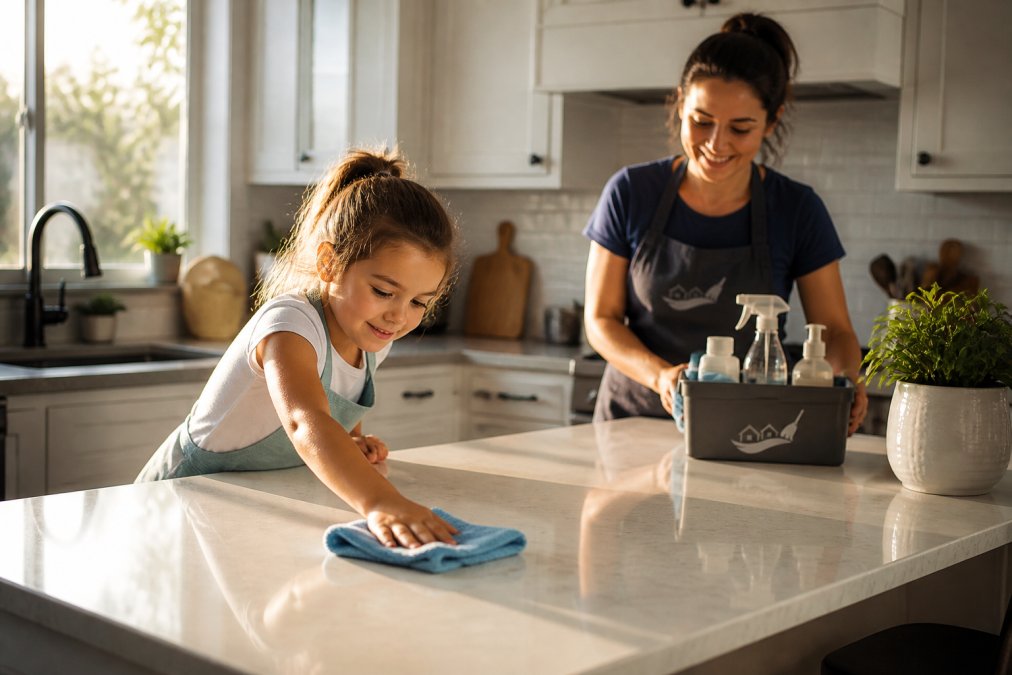
Identify high-traffic areas: kitchen, entryway, and main bathroom. These need daily attention but only briefly, wipe counters after dinner, sweep toys nightly. Reserve deeper tasks for specific days: vacuuming Tuesday, mopping Thursday.
The Zone Cleaning Method
The zone cleaning method assigns each area a specific day: Monday kitchen, Tuesday bathrooms, Wednesday primary bedroom. This works because it aligns with how mess accumulates and prevents any single day from becoming overwhelming. It also makes it easier to assign zones to children based on their ability level.
Daily Maintenance to Reduce Weekly Load
Daily maintenance habits, wiping the sink, putting shoes away, loading dishes, take seconds but save hours later. They are the difference between a 15-minute daily tidy and a three-hour Saturday deep clean. When every family member adopts these micro-habits, the weekly load shrinks dramatically.
Time-Saving Cleaning Hacks for Busy Parents
Clean top-to-bottom and dry-to-wet: dust before vacuuming to avoid re-soiling. Keep supplies in the rooms where you use them, a caddy under the bathroom sink eliminates trips to a central closet. Use microfiber cloths and a good vacuum with attachments to cut manual effort.
Habit Stacking and Chore Delegation
Habit stacking attaches cleaning tasks to existing routines, unload the dishwasher while coffee brews. Delegate chores by age: toddlers sort toys, school-age kids manage laundry and bathrooms. A rotating chore chart distributes the workload fairly and reduces parental burden.
Essential Tools That Cut Cleaning Time in Half
Invest in versatile tools: microfiber cloths, a cordless vacuum, a spray mop, and a detail brush. These reduce physical effort and make consistent cleaning more likely.
Benefits of Recurring Cleaning Services for Your Family
For busy families, hiring professional cleaning is a math problem, not an indulgence. The real benefit is reclaiming time and eliminating decision fatigue so parents can redirect energy toward children, work, or rest.
The Time-Reclamation Calculation
A typical family spends 4-8 hours weekly on cleaning. Professional services can reduce cognitive load, no mental tracking of overdue tasks or guilt about unfinished chores.
When to Hire: A Decision Framework
The decision to hire depends on three factors: Available Time (if cleaning takes up significant time); Available Energy (if cleaning causes conflict or chronic stress, it's a mental health investment); Family Stage (toddlers and major life events benefit from temporary support).
Frequency and Scope: Matching Service to Your Needs
Recurring cleaning doesn't require full-house weekly service. Options include bi-weekly deep cleaning of high-impact areas, monthly full-home cleaning, or seasonal deep cleaning. Outsource based on your pain points, not a generic checklist.
The Consistency Benefit
Recurring services provide external accountability and consistency, encouraging baseline tidiness and ensuring deep tasks are done correctly. For families with executive dysfunction, ADHD, or chronic illness, this consistency is essential infrastructure that reduces constant mental effort.
When DIY Isn't Enough: Deep Cleaning and Professional Help
After busy holidays, during spring, or before special events, DIY efforts may be insufficient. Professional deep cleaning tackles difficult tasks like cleaning behind appliances, scrubbing grout, and washing windows.
Monthly Deep Cleaning Tasks vs. Weekly Maintenance
Understanding the difference between monthly deep cleaning tasks and weekly maintenance is essential for a realistic plan. Weekly maintenance focuses on surface sanitization, vacuuming, and mopping high-traffic areas. Monthly deep cleaning targets the details that weekly routines miss.
| Task Type | Frequency | Examples | Best For |
|---|---|---|---|
| Maintenance Cleaning | Weekly | Vacuuming, mopping, dusting, bathroom wipe-down | Keeping daily messes manageable |
| Deep Cleaning | Monthly or Quarterly | Cleaning inside oven, behind fridge, baseboards, windows | Resetting the home and preventing buildup |
| Spot Cleaning | Daily | Wiping spills, tidying toys, cleaning mirrors | Maintaining order between deeper cleans |
Deep cleaning tasks require more time and specialized supplies. If your schedule cannot accommodate these tasks, professional services offer a practical solution. A team can complete a comprehensive deep clean in a few hours, a job that might take a family an entire weekend.
Involving Children in Household Chores
Involve children by developmental stage: toddlers sort laundry, school-age kids manage their rooms, teenagers handle full bathrooms. Make expectations clear and enforce them consistently. When children participate, they develop ownership and reduce parental burden.
Creating Realistic Expectations and Stress Reduction
Sustainable cleaning systems fail when underlying psychology is ignored. Perfectionism, guilt, executive dysfunction, and burnout cannot be overcome by schedules or hacks alone.
Perfectionism and the "Good Enough" Standard
Perfectionism often stems from internalized standards tied to self-worth. Define "clean enough" for your household and write it down: daily kitchen wipe-down and floor sweep, weekly bathroom and floor cleaning, toys in bins, beds made. This boundary is not failure, it's functional, healthy, and genuinely clean.
Guilt and the Myth of the "Doing It All" Parent
Research shows that the expectation of perfection, not the actual state of the home, drives parental burnout. Families that accept a lived-in home and distribute responsibilities report lower stress and higher satisfaction. Giving yourself permission for a "good enough" home raises your standards for what matters: presence with children, mental health, and relationships.
Executive Dysfunction and the Activation Problem
For parents with ADHD, depression, or chronic illness, activation, not motivation, is the barrier. Use external structure: set specific times ("Tuesday at 7 p.m."), use timers, pre-assign tasks, use checklists, consider body doubling, and automate where possible. If you struggle to initiate, adjust your system to match your neurology, not your expectations.
Burnout and the Permission to Outsource
Burnout, where managing the home exceeds your capacity, is solved by reducing the load, not by better schedules. If you're in burnout, outsourcing is a necessary reset, not a luxury. Professional help costs less than burnout's toll: lost productivity, relationship strain, health impacts, and stress on your children.
Reframing Cleaning as Family Infrastructure
Reframe cleaning as family infrastructure, a functional system supporting health and safety, not a personal responsibility or measure of worth. You succeed if the home is safe and functional, not perfect. Hiring help is strategic, not lazy. A lived-in home shows you prioritize people over things. When cleaning becomes infrastructure, stress dissolves and you focus on the actual goal: supporting your family's well-being.
Frequently Asked Questions
How do you keep a house clean with a busy family?
The key is breaking cleaning into small daily habits rather than waiting for one overwhelming weekend session. Assign each family member a 10-minute daily task (wiping kitchen surfaces, tidying the living room, sorting laundry), use zone cleaning to focus on one area per day, and establish a realistic weekly schedule. Most busy families find that 15 minutes of daily maintenance prevents the need for exhausting deep cleaning binges. Many also discover that hiring a professional cleaning service once or twice monthly for high-traffic areas and deep tasks reduces household stress significantly.
What is the best cleaning schedule for working parents?
A weekly house cleaning schedule for families works best when it combines daily 10-minute tasks with designated weekly focus areas. Monday might target bathrooms, Tuesday the kitchen, Wednesday bedrooms, and so on. This spreads the workload across the week instead of cramming it into weekends. High-traffic areas like entryways and kitchens need daily surface sanitization, while less-used spaces can be cleaned every two weeks. Many working parents also find that a monthly professional deep cleaning service handles tasks they can't fit into their routine, like baseboards, inside appliances, and thorough floor care.
What are the most effective time-saving cleaning hacks for families?
Time-saving cleaning hacks for busy parents include habit stacking (cleaning while waiting for coffee to brew), using multi-purpose cleaners to reduce product switching, and delegating age-appropriate chores to children. Microfiber cloths cut drying time in half compared to paper towels. Pre-treating spills immediately prevents them from becoming stubborn stains. Setting a timer for 15 minutes encourages focused work without overthinking. Decluttering before vacuuming and mopping saves significant time. Many families also use digital chore charts or apps to track who is responsible for what, eliminating decision fatigue about task assignment.
How often should a busy family hire professional cleaners?
Frequency depends on your family size, schedule, and budget. Many busy families benefit from recurring cleaning services every two weeks for high-traffic areas, or monthly for a full deep clean that handles tasks like sanitizing baseboards, inside ovens, and thorough floor maintenance. Even one professional cleaning per month significantly reduces stress and prevents buildup in hard-to-reach places. Some families use professional services for move-in or move-out situations, or when life gets particularly hectic. The investment often pays for itself through reduced household stress and more time for family activities rather than endless cleaning chores.
This article was written using GrandRanker
Frequently Asked Questions
Q: How do you keep a house clean with a busy family?
A: The key is breaking cleaning into small daily habits rather than waiting for one overwhelming weekend session. Assign each family member a 10-minute daily task (wiping kitchen surfaces, tidying the living room, sorting laundry), use zone cleaning to focus on one area per day, and establish a realistic weekly schedule. Most busy families find that 15 minutes of daily maintenance prevents the need for exhausting deep cleaning binges. Many also discover that hiring a professional cleaning service once or twice monthly for high-traffic areas and deep tasks reduces household stress significantly.
Q: What is the best cleaning schedule for working parents?
A: A weekly house cleaning schedule for families works best when it combines daily 10-minute tasks with designated weekly focus areas. Monday might target bathrooms, Tuesday the kitchen, Wednesday bedrooms, and so on. This spreads the workload across the week instead of cramming it into weekends. High-traffic areas like entryways and kitchens need daily surface sanitization, while less-used spaces can be cleaned every two weeks. Many working parents also find that a monthly professional deep cleaning service handles tasks they can't fit into their routine, like baseboards, inside appliances, and thorough floor care.
Q: What are the most effective time-saving cleaning hacks for families?
A: Time-saving cleaning hacks for busy parents include habit stacking (cleaning while waiting for coffee to brew), using multi-purpose cleaners to reduce product switching, and delegating age-appropriate chores to children. Microfiber cloths cut drying time in half compared to paper towels. Pre-treating spills immediately prevents them from becoming stubborn stains. Setting a timer for 15 minutes encourages focused work without overthinking. Decluttering before vacuuming and mopping saves significant time. Many families also use digital chore charts or apps to track who is responsible for what, eliminating decision fatigue about task assignment.
Q: How often should a busy family hire professional cleaners?
A: Frequency depends on your family size, schedule, and budget. Many busy families benefit from recurring cleaning services every two weeks for high-traffic areas, or monthly for a full deep clean that handles tasks like sanitizing baseboards, inside ovens, and thorough floor maintenance. Even one professional cleaning per month significantly reduces stress and prevents buildup in hard-to-reach places. Some families use professional services for move-in or move-out situations, or when life gets particularly hectic. The investment often pays for itself through reduced household stress and more time for family activities rather than endless cleaning chores.