 listicle
Benefits of Recurring Cleaning Services: 2026 Guide
Table of Contents
- Why Recurring Cleaning Services Deliver More Than a Clean Home
- Health and Hygiene: Indoor Air Quality, Allergen Reduction, and Germ Elimination
- Time Savings, Productivity, and the Real ROI of Home Maintenance
- Recurring Cleaning vs One-Time Deep Cleaning: What Actually Makes Sense
- How Often Should You Hire a House Cleaner?
- Standard Recurring Cleaning Checklist: What Each Visit Covers
- Environmental Impact, Safety, and Choosing a Trustworthy Provider
- The Long-Term Benefits of Recurring Cleaning Services for Your Home
Last Updated: August 19, 2026
Why Recurring Cleaning Services Deliver More Than a Clean Home
Most people view cleaning services as a convenience for busy schedules. But a well-run recurring cleaning service does far more, it creates a system where your home never fully deteriorates between visits, fundamentally changing how you live in your space.
Recurring cleaning services are scheduled professional cleaning visits that maintain a home's hygiene, organization, and condition on a regular basis, whether weekly, biweekly, or monthly. At Maticulous Cleaning, we've seen how a consistent maintenance schedule transforms not just cleanliness, but the daily experience of the people living there. The benefits span health outcomes, mental load, home asset preservation, and environmental impact.
Health and Hygiene: Indoor Air Quality, Allergen Reduction, and Germ Elimination
Professional residential cleaning systematically removes contaminants that affect indoor air quality and long-term health. According to the EPA's guide to indoor air quality, indoor air can be two to five times more polluted than outdoor air, largely due to dust, pet dander, mold spores, and volatile organic compounds that accumulate in carpets, upholstery, and ventilation systems.
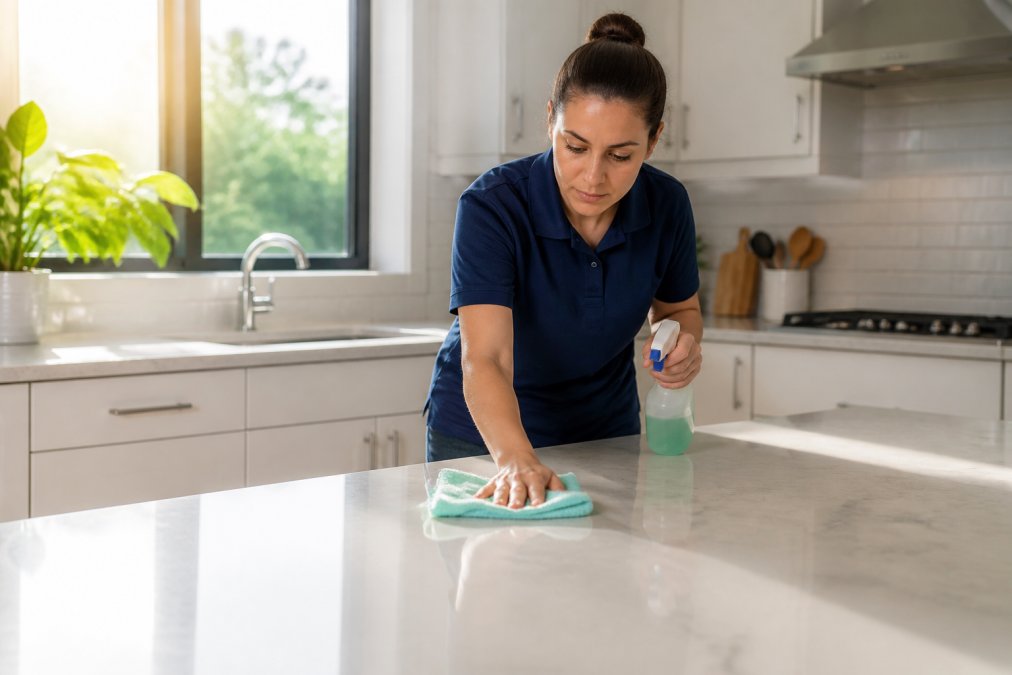
Professional cleaners use tools and techniques that exceed standard cleaning. Microfiber cloths trap particles rather than redistributing them. HEPA-filter vacuums pull allergens from carpet fibers. High-touch surfaces, door handles, light switches, countertops, receive consistent sanitization that reduces bacteria growth. For households with children, elderly residents, or anyone managing respiratory issues, this distinction matters considerably.
How Dust Accumulation and Bacteria Growth Affect Your Family
Dust accumulation carries dust mites, pet dander, mold spores, and airborne bacteria. Once concentrations build, they become difficult to address with casual cleaning. Bacteria growth follows a similar pattern on kitchen surfaces, bathroom fixtures, and soft furnishings. A recurring service maintains hygienic standards because the interval never gets long enough for contamination to reach problematic levels.
The Psychological Impact of Clutter on Stress and Mental Load
Research from Princeton University Neuroscience Institute's work on clutter and focus shows that visual disorder competes for attention in the brain, reducing focus and increasing stress hormone levels. Recurring cleaning services remove the mental load of managing domestic chores from your weekly decision-making. You stop tracking what needs to be done and stop spending mental energy on scheduling. That cognitive relief is one of the most underrated benefits.
Time Savings, Productivity, and the Real ROI of Home Maintenance
The true value of a cleaning service lies in what your time is worth. If you're spending three to four hours weekly cleaning, redirecting those hours to work, family, or rest delivers significant returns.
Beyond time, there's the ROI of home maintenance itself. Homes receiving consistent professional care age better. Grout stays cleaner and lasts longer. Appliance surfaces don't accumulate grime that shortens operational life. Hardwood floors protected by regular cleaning require refinishing less frequently. Preventative maintenance through recurring service is always cheaper than deferred maintenance.
Recurring Cleaning vs One-Time Deep Cleaning: What Actually Makes Sense
A one-time deep cleaning is the right tool for specific situations: moving into a new home, preparing a property for sale, post-renovation cleanup, or recovering from extended neglect. Recurring cleaning services maintain that baseline once it's established.
Many households benefit from starting with a deep clean and transitioning to a recurring schedule. The deep clean handles accumulated work; the recurring service prevents that accumulation from returning.
| Scenario | Best Option | Frequency |
|---|---|---|
| Moving into a new home | One-time deep clean | Once, before move-in |
| Ongoing home maintenance | Recurring service | Weekly, biweekly, or monthly |
| Post-renovation cleanup | One-time deep clean | Once, post-construction |
| Busy household with kids/pets | Recurring service | Weekly or biweekly |
| Seasonal reset | Deep clean + recurring | Quarterly + ongoing |
| Preparing home for sale | One-time deep clean | Once, pre-listing |
Pros and Cons of Recurring Cleaning Services
Pros:
- Consistent indoor air quality and allergen reduction
- Predictable scheduling removes domestic chores from your mental load
- Long-term cost-effectiveness through preventative maintenance
- Professional tools and hygienic standards exceeding DIY results
- Flexibility to adjust frequency as needs change
- Tailored cleaning plans accounting for your home's specifics
Cons:
- Ongoing cost requires budgeting as a regular household expense
- Requires trust in provider vetting and cleaner reliability
- Initial visits may take longer as the team learns your home
- Scheduling coordination needed for irregular routines
- Results depend on provider reliability and attention to detail
How Often Should You Hire a House Cleaner?
The right frequency depends on household size, number of occupants, presence of pets, and your cleanliness threshold.
- Weekly: Best for households with young children, multiple pets, or high foot traffic. Also appropriate for anyone with significant allergies where indoor pollutant control is a health priority.
- Biweekly: The most common choice for working adults and families without pets. Balances cost-effectiveness with maintaining a genuinely clean environment.
- Monthly: Suitable for single occupants or couples without pets who maintain reasonable tidiness independently.
Most households underestimate how often they need professional help. A home with two adults, two children, and a dog on a monthly schedule will spend most of the month in gradual decline. Biweekly is usually the minimum for that profile to see real lifestyle improvement. Adjust after the first two months based on actual results.
Standard Recurring Cleaning Checklist: What Each Visit Covers
A professional recurring service visit addresses:
Kitchen:
- Countertops and backsplash wiped and sanitized
- Stovetop cleaned and degreased
- Exterior of appliances wiped down
- Sink and fixtures sanitized
- Floors swept and mopped
Bathrooms:
- Toilet cleaned inside and out, including base
- Shower and tub scrubbed, soap scum removed
- Sink and vanity sanitized
- Mirrors cleaned streak-free
- Floors mopped and grout wiped
Living Areas and Bedrooms:
- Dusting of all surfaces, including ceiling fans
- Vacuuming of carpets, rugs, and upholstered furniture
- Hard floor sweeping and mopping
- Baseboards and window sills wiped
- Trash emptied and liners replaced
High-Touch Surfaces (every visit):
- Door handles and knobs sanitized
- Light switches wiped
- Remote controls and frequently handled items cleaned
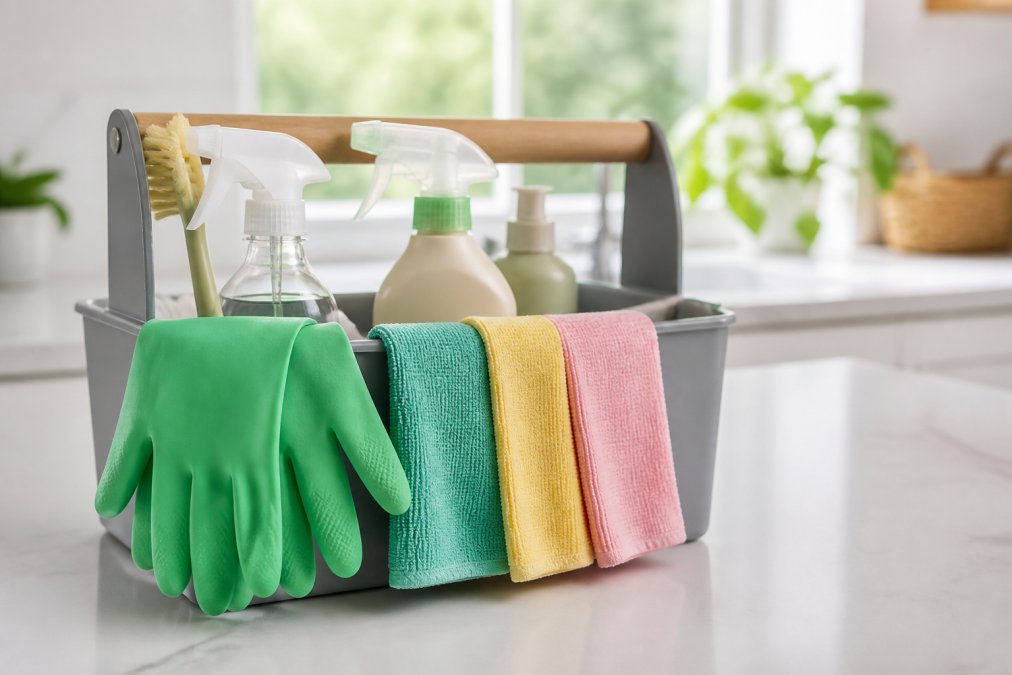
Hard-to-reach areas like behind the refrigerator and interior windows are typically handled on a rotating basis or as add-on services. A quality provider will discuss which fall within standard scope.
Environmental Impact, Safety, and Choosing a Trustworthy Provider
Professional cleaning services using concentrated, low-waste products and microfiber systems have a smaller footprint than household spray bottles. Some providers offer plant-based, non-toxic solutions that reduce indoor pollutants while minimizing chemical runoff.
On safety and vetting, you're inviting someone into your home regularly. According to the Federal Trade Commission's guidance on hiring home service workers, ask providers directly about background checks, insurance coverage, employee supervision, and accountability policies.
Key questions before signing up:
- Do you run criminal background checks on all cleaners?
- Are your cleaners employees or independent contractors?
- Does the same team return each visit?
- What is your policy if something is damaged or goes missing?
- Do you carry liability insurance?
Consistency of personnel matters significantly. The same cleaner learns your home's specific needs and preferences, translating into better results over time.
The Long-Term Benefits of Recurring Cleaning Services for Your Home
The compounding effect of consistent professional care separates recurring cleaning from other home maintenance decisions. Short-term, you gain a clean home and recovered time. Medium-term, you see improved indoor health outcomes and reduced stress. Long-term, you achieve genuine asset preservation: a consistently maintained home retains condition, requires fewer costly repairs, and presents better when selling or renting.
Homes demonstrating consistent upkeep command stronger market positions. The psychological benefit compounds too, households using recurring services report that consistent cleanliness raises their baseline expectations for their living environment, making home a place of genuine rest rather than ongoing obligation.
Keeping a home genuinely clean consistently is harder than it sounds when life is already full. Maticulous Cleaning provides professional residential cleaning services built around meticulous attention to detail and reliable scheduling, so your home stays at the standard you want without requiring your constant effort. Get started with Maticulous Cleaning and experience the difference that consistent, dependable service makes.
Frequently Asked Questions
How often should you have a recurring cleaning service come to your home?
The right frequency depends on your household size, lifestyle, and how quickly your home accumulates dust and clutter. Homes with children, pets, or allergy sufferers typically benefit from weekly or bi-weekly visits. Smaller households or those with lighter foot traffic often find monthly service sufficient. A professional cleaning company can assess your space and recommend a tailored cleaning plan that matches your needs and budget.
Does a recurring cleaning service save money compared to one-time deep cleaning?
Over time, yes. Regular maintenance prevents the heavy buildup of grime, grease, and bacteria that makes deep cleaning necessary and more expensive. Consistent sanitization also reduces wear on surfaces, flooring, and fixtures, which lowers long-term repair and replacement costs. Think of recurring service as preventative maintenance: smaller, predictable investments that protect a much larger asset, your home.
What is included in a standard recurring cleaning visit?
A standard recurring cleaning visit typically covers vacuuming and mopping all floors, dusting surfaces and ceiling fans, cleaning and sanitizing bathrooms, wiping down kitchen counters and appliances, emptying trash, and tidying common areas. Hard-to-reach spots like behind the refrigerator or inside the oven are usually reserved for deep cleaning visits. Your provider should offer a clear checklist so you know exactly what each visit includes.
How do I know a recurring cleaning service is trustworthy and safe to schedule regularly?
Reputable providers vet their staff through background checks and train them to consistent hygienic standards before sending anyone into a client's home. Ask any prospective company whether their cleaners are employees or independent contractors, what their screening process looks like, and whether they carry liability insurance. Reading verified reviews and asking about satisfaction guarantees also helps you gauge reliability before committing to a recurring schedule.
This article was written using GrandRanker